What to check when your home has frequent power interruptions
Start with what you see
When the lights flicker or the television cuts out more than once in a week, it's easy to blame the utility company. But a pattern of brief, scattered interruptions often has a cause inside the house. Before you call anyone, spend a few minutes looking at the obvious clues. A consistent approach to electrical troubleshooting saves time and helps you describe the problem accurately if you do need professional help.
Note the timing and the affected circuits
Keep a small notebook or use a note app for three or four days. Write down the exact time of each interruption and which lights or outlets went dead. Does the outage always happen when the microwave and the toaster run at the same time? Does the bathroom light flicker only when the hair dryer is on? The pattern reveals whether the trouble is in one branch circuit or across the whole house. A problem that trips only one circuit is almost certainly inside your wiring or that circuit's load. A total blackout that resets after a few minutes may point to a utility issue, but it can also be a main breaker or a loose connection at the meter.
Check the obvious first: the circuit breaker
Before you open the electrical panel, stand back and look. A breaker that has tripped will sit somewhere between the ON and OFF positions, or it will be clearly in the OFF position. Reset it only once. If it trips again immediately or within a few minutes, do not keep resetting it. The breaker is doing its job: it is a protective device that opens the circuit when current exceeds the safe limit. Repeated tripping means something is drawing too much power, or there is a short circuit or ground fault on that branch circuit. A breaker that feels warm to the touch is also a warning sign. That warmth means the connection inside the breaker or at the bus bar is loose or corroded, and that is a fire risk. Leave that breaker off and call a licensed electrician.
Look for overloaded circuits
Modern homes have more devices plugged in than the wiring was designed for. A typical 15-amp branch circuit can handle about 1,800 watts at once, not counting the start-up surge of motors. If your home office, the living room entertainment center, and a space heater all share one circuit, you are likely exceeding that limit. The breaker trips to protect the wire from overheating. The fix is often simple: move the space heater or the high-wattage appliance to a different circuit. If that is not possible, a qualified electrician can add a new circuit, but that is a job that involves work inside the panel and sometimes new wiring through walls. Do not attempt it yourself.

Inspect receptacles and switches for damage
Walk through the affected rooms and look at every outlet and wall switch. Discoloration, a yellow or brown halo around the plug face, or a slight burn smell means the connection inside the outlet is failing. Loose receptacles that wobble when you plug something in are also a hazard. A loose connection creates resistance, which creates heat, which can start a fire in the wall. If you see any of these signs, stop using that outlet and arrange for a professional inspection. The same goes for a switch that feels hot or makes a crackling sound when you toggle it. These are classic signs of a wiring fault inside the box.
Listen for buzzing or humming sounds
Sometimes the clues are audible. A breaker that hums under load, a receptacle that buzzes when a device is plugged in, or a dimmer switch that makes a soft sizzle - each of these points to arcing or a poor connection inside the component. Arcing generates extreme heat in a tiny spot and is one of the leading causes of electrical fires. If you hear anything unusual, turn off the device that is running and call an electrician. Do not keep using the circuit to see if it "gets better." It will not.
Check for ground faults in damp areas
Kitchens, bathrooms, laundry rooms, and outdoor outlets are exposed to moisture. A ground fault occurs when current leaks from a hot wire to a grounded surface, such as a metal box or a water pipe. A GFCI (ground fault circuit interrupter) outlet or breaker is designed to sense that tiny leakage and trip instantly. If your GFCI trips regularly, especially after rain or when the humidity is high, there is moisture getting into an outdoor box or a crack in the insulation of an underground cable. A ground fault can also happen inside an appliance. Unplug everything on that circuit and reset the GFCI. If it holds, plug the appliances back in one at a time. The one that makes it trip again is the problem. Have that appliance repaired or replaced. If the GFCI trips with nothing plugged in, the fault is in the wiring itself, and an electrician needs to trace it.
Examine the electrical panel for rust or corrosion
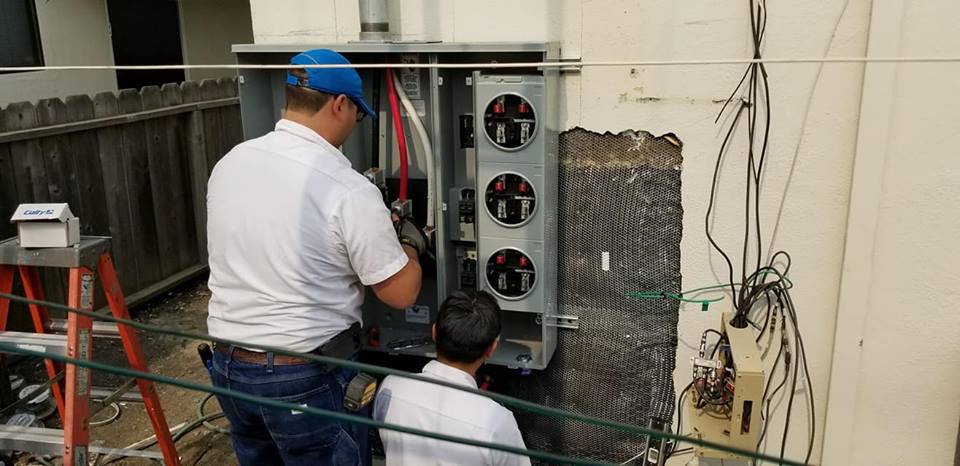
The main electrical panel is usually in a basement, garage, or utility closet. Open the door carefully. Do not touch any bare wires or terminals inside. Look for rust, white or green corrosion on the breaker faces or on the metal enclosure. Corrosion creates resistance and can cause breakers to fail or to overheat. If you see moisture stains on the wall above the panel or water dripping nearby, that is an urgent issue. Water inside the panel can cause a short circuit or a fire. Call an electrician immediately. Do not try to dry it out with a hair dryer or fan. The panel is a sealed system, and any DIY intervention can be dangerous.
Consider the age of your wiring
Homes built before the 1980s often have wiring that is undersized for today's loads. Older insulation, especially the cloth-wrapped type used before 1960, becomes brittle and cracks, exposing bare wire. If your home still has a fuse box instead of a circuit breaker panel, the system is very old and likely cannot handle modern demands. A licensed electrician can evaluate the condition of the wiring and tell you whether an upgrade is necessary. While you can check the age of your panel by looking at the manufacturer's date sticker on the inside of the door, only a professional should open the panel to inspect the wiring condition.
When the problem is intermittent
The hardest electrical issue to diagnose is one that comes and goes. A loose connection at a junction box in the attic or inside a wall can make contact most of the time, but vibration from a passing truck or the thermal expansion of wires during a hot afternoon can break that contact momentarily. The result is a flicker or a brief outage that resets itself before you can get to the panel. This kind of intermittent fault is dangerous because it can arc and start a fire without tripping a breaker. If you cannot track down the cause using the steps above, it is time to bring in a professional. Companies like Wooding Electric have the tools and experience to locate loose connections and hidden wiring faults that are not visible during a simple walk-through.
Keep a log and share it with the electrician
Before you call for help, write down everything you have observed. The times, the affected circuits, which breakers tripped, and any unusual sounds or smells. A good electrician can use that log to narrow down the possibilities quickly. You will save money on diagnostic time and get a more accurate repair. If the problem turns out to be on the utility side - a loose connection at the pole or a failing transformer - the electrician can tell you that too, and you can then contact the power company with specific information.
Electrical troubleshooting does not require a multimeter or a wiring diagram. Most of the work is observation and common sense. If you notice a pattern, a physical defect, or a sound that seems wrong, treat it seriously. A small issue now can become a large repair - or a safety emergency - if left alone.

When you need a professional assessment, a company such as Wooding Electric can evaluate your home's electrical system and recommend the right fix. The goal is not just to stop the flickering but to make sure the wiring is safe for the long term. Frequent power interruptions are almost always a sign that something needs attention. With a systematic approach, you can find the source and get it resolved.